Ten years have passed since Nicolás García Uriburu’s passing. This anniversary invites us to remember his work and revisit the questions he raised throughout his life, which today, in the face of the global environmental crisis, take on a new urgency.
Nicolás García Uriburu (Buenos Aires, 1937–2016) was an Argentine artist whose work occupies a unique place in contemporary art. Trained as an architect, he soon expanded his practice into a territory where art, nature, and public action began to intertwine. Beginning in the late 1960s, he developed pioneering work that placed ecosystems—rivers, forests, territory—at the center of his artistic reflection.
Uriburu transformed art into a form of ecological awareness. At a time in history when the environmental crisis was not yet a central topic of public debate, he began to highlight the growing conflict between civilization’s model of development and the planet’s natural balance.
For Uriburu, a work of art should not be limited to the space of a museum or the surface of a canvas. Art could become a tool to make nature visible and warn of its fragility. His actions on rivers, his paintings, his manifestos, and his interventions in public spaces sought to raise awareness about the relationship between humans and the planet.
Today, in a context marked by climate change, biodiversity loss, and the crisis of natural resources, his work takes on even greater resonance. Many of the questions Uriburu asked more than half a century ago—about water, land, and air as interdependent systems—have become central to understanding the environmental challenges of the present.
Ten years after his passing, this tribute seeks to bring his thinking and work back into circulation. Recently, a sustained process of work on his legacy has begun: the digitization of his archive, the recataloging of his artistic production, and the reissue of fundamental publications. These tasks are part of an effort to preserve, study, and transmit his work, expanding access to materials that allow us to understand the depth and relevance of his thinking.
This anniversary also marks the beginning of a new phase of projects, encounters, and collaborations that will broaden the reading of his work and continue to expand the ideas that permeated his life.
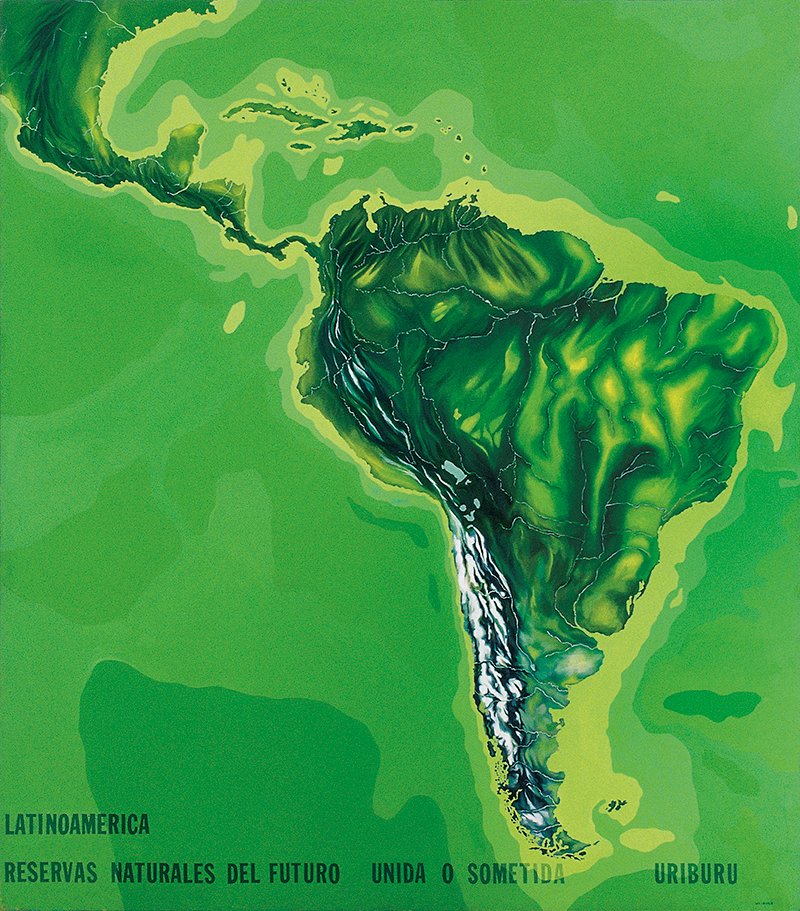
As Nicolás García Uriburu wrote in 1973: “Latin America: Reserves of the Future.”
His work continues to invite us to think about where in the world we imagine our future.