Nicolás García Uriburu was chosen as the focus of the seminar “Reserves of the Future: Latin American Art and the Critique of Extractive Reason,” which is part of the Master’s program in Curatorial Studies at CCS Bard in New York.
The initiative is organized by CCS Bard in collaboration with ISLAA, and represents a new opportunity for the Nicolás García Uriburu Foundation to introduce the artist’s work and thought to a new generation of curators and researchers.
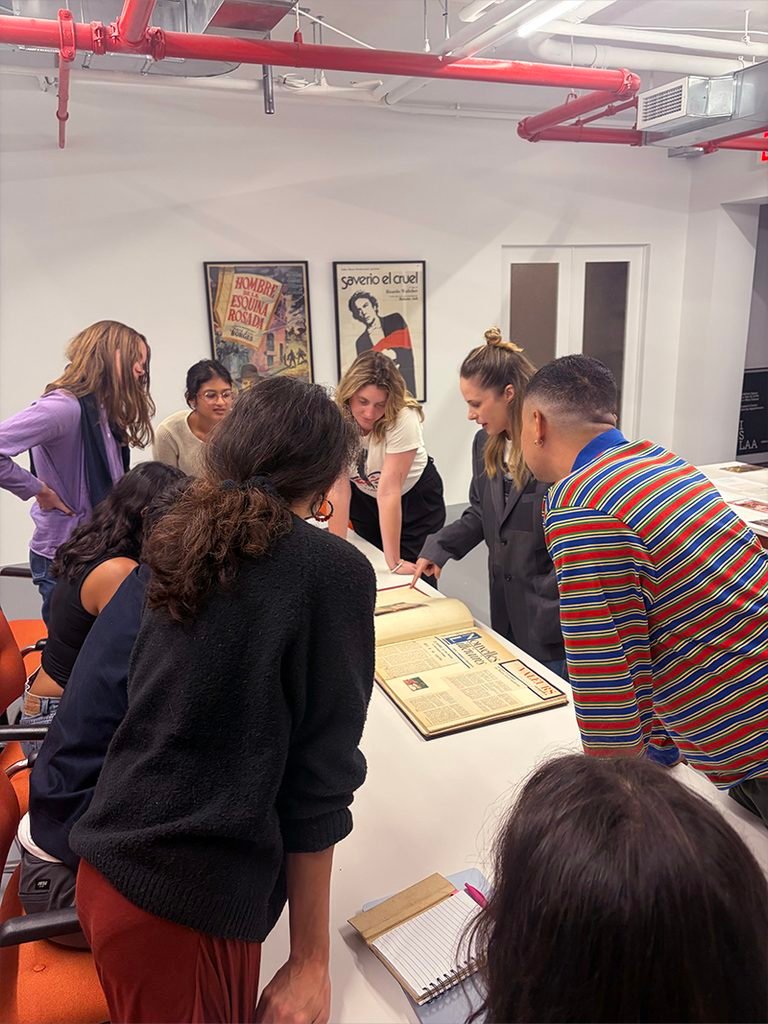
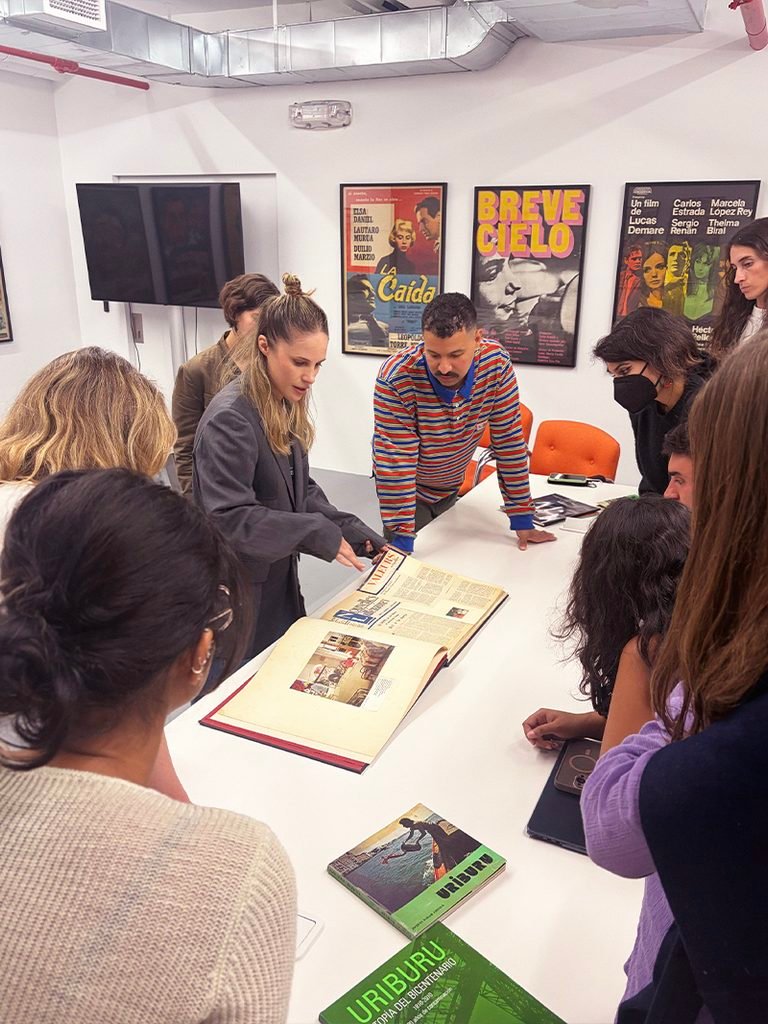
As part of the seminar, the Foundation traveled to New York in late September to share with the students original material from Nicolás’s archive: one of the albums the artist compiled with press clippings, drawings, and photographs. This material is particularly valuable for understanding his career, as it offers insight into Nicolás not only as an artist but also as the first archivist of his own work.
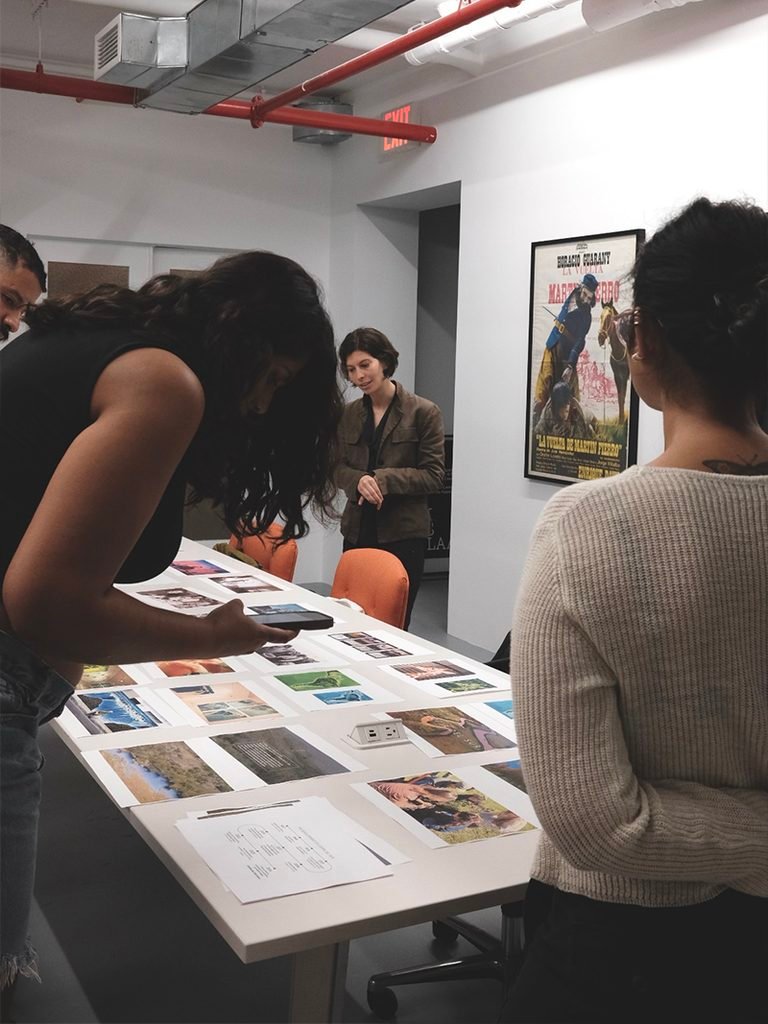
During the meeting, the Foundation had the opportunity to speak with the students and share with them aspects of the archive and Nicolás’s work. They will be responsible for researching and presenting his work in the exhibition, which will open in December of this year.
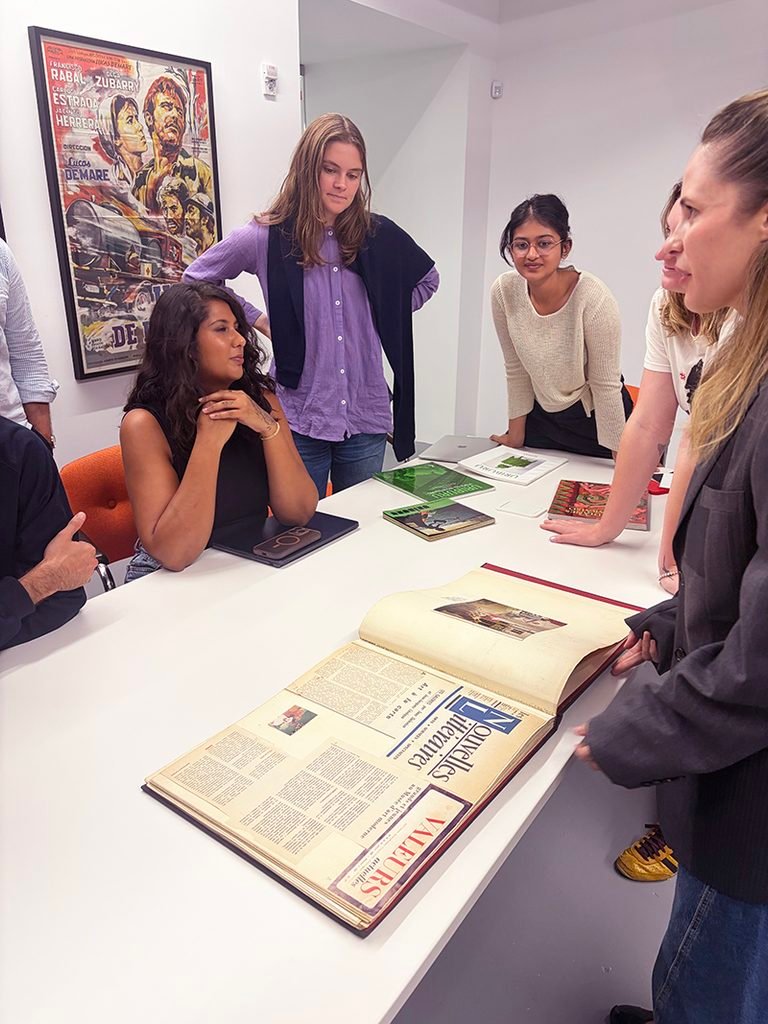
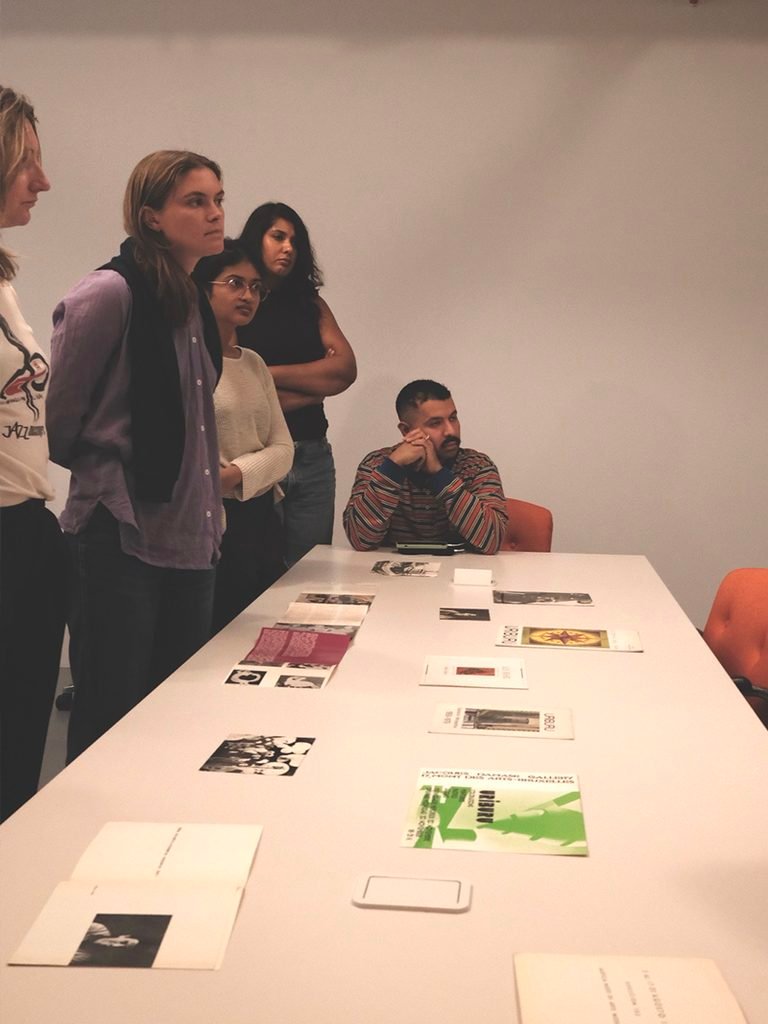
Participation in this project was made possible thanks to the support of Mariano López Seoane, the program director, and Ariel Aisiks and Agustín Diez Fischer of ISLAA. The Foundation particularly highlights the hospitality and generosity with which they were received and the value of this partnership with CCS Bard and ISLAA.
The exhibition also marks a special return of Nicolás’s work to New York. The artist had previously intervened in the city’s waterways, and on this occasion, his work returns through the efforts of a new generation of curators.
Nicolás’s family continues to support and sustain the Foundation’s work alongside Utopía del Sur, directed by Azul Pereda, and Catalina Fabbri, the Foundation’s coordinator.
Nicolás García Uriburu was an artist who broke paradigms and challenged art institutions, taking his work to rivers, cities, and public spaces. His work was also accompanied by a worldview rooted in best practices and respect for human beings, animals, and the planet. These are values that Azul García Uriburu continues to uphold today.
In a context where caring for the environment and life is becoming increasingly urgent, preserving and sharing this legacy is also a way to build the future.